An open Jarvis
Coming 1 July 2026

echo.

An open Jarvis.
On every screen.

A personal AI assistant. Voice, vision, memory, a translucent multi-monitor HUD. Runs on whichever AI subscription you already pay for. No API keys. No second bill. Cross-platform. Open source.

Where you are
--°
Allow location
for live weather
Countdown
0
d
00
h
00
m
00
s
to 1 July 2026
echo
Listening
you said
"What is on my schedule today"
echo
Standup at 09:30. Design review at 11. Six unread emails.
Runs on
Mac · Win · Lin
From one Rust core
Cost to you
£0/mo
No API keys, no second bill
No API keysLocal-firstMIT open source
Scroll for the rest of the site
Available for new projectsOne client at a timeBased in the UK

I ship the production AI your team will inherit.

Independent software engineer. Multi-provider AI gateways, agent orchestration, real-time voice, evaluation harnesses, infrastructure as code. Nineteen open-source repos. Eighty-three long-form posts. One client at a time, every commit on me.

By the numbers

live

19

Open-source repos

MIT-licensed

83

Technical posts

with charts + citations

~5

Years in production

shipping software

< 50ms

AI failover handoff

across many engines

This week at Sarmalinux

What just shipped,
what is next.

A live feed of the studio. Public releases, conference notes, code merges, the launches I am actually working toward.

Event1 to 5 Jun 2026

NVIDIA GTC Taipei at Computex 2026, full recap

Jensen opened with the largest single-keynote drop in years. Vera Rubin NVL72 in full production. RTX Spark and DGX Station GB300 making personal AI compute real on Windows. Cosmos 3 plus the Isaac GR00T humanoid reference. Nemotron 3 Ultra at 550B mixture-of-experts. Plus a fresh media stack and an enterprise agent runtime. Long-form open-source-engineer take with NVIDIA-courtesy images.

Read more
Event30 May to 1 Jun 2026

AI Engineer World's Fair 2026, three-day recap

Three days in San Francisco, six themes that defined where AI engineering is going. MCP took the year. Multi-provider gateways became table stakes. Voice cleared the sub-second bar. Evals as code beat the dashboard era. Local-first assistants quietly rose. Full long-form write-up plus my own roadmap response.

Read more
Launch1 July 2026

echo 0.1.0, the public launch

echo is the open Jarvis. Brain-agnostic, voice loop, vision, persistent memory, translucent multi-monitor HUD, MCP skill bus. Runs on whichever AI subscription you already pay for. Cross-platform from one Rust core. MIT licensed. Signed installers for macOS, Windows and Linux. Watch the repo for the drop.

Read more
MergeYesterday

slipstream Windows fix landed

PR #1 merged. The MCP stdio server now starts on Windows. Path separator normalisation in the entry guard. Zero behaviour change on macOS or Linux. Confirmed handshake returns all nine sp_ tools on a Windows build.

View on GitHub
ReleaseA fortnight ago

Sarmalink-AI v2 shipped, ten new features

Intent auto-routing. Multi-step agent runner with SSE event stream. MCP-shape tool catalog. TTS and STT cascades with Cloudflare plus Gemini fallbacks. Live-data tools across weather, FX and HN with no API keys required. Image generation with rotation across CF account-token pairs. Quota tracker on a Supabase view. Smart-suggestions endpoint. Reasoning-leak stripper. Markdown to PDF plus JSON to XLSX export routes.

Read more
BlogThis week

Stack the conference confirmed, in 2,000 words

A long read on why MCP-shaped tools, multi-provider failover, journaled agents, evals-as-code in CI, sub-second voice loops, and local-first desktop assistants are now the assumed baseline. Honest opinions. Real citations. My own roadmap in response.

Read more
New flagship · open source · MIT

slipstream

A disciplined replacement for the default coding-agent loop. Lossless context compaction, per-project memory that survives restarts, a live local dashboard for sessions, sub-agents and token spend. Built so the agent stops burning my tokens on things it should already know.

  • · Token-efficient context compaction with zero fact loss
  • · Per-project persistent memory across sessions and restarts
  • · Live local dashboard for sessions, sub-agents, token spend
  • · Pluggable model adapters, runs against any chat API
  • · Single binary, drops in alongside existing tooling
Lossless
compaction
Per-project
memory
Live
dashboard
Pluggable
adapters
Single
binary
MIT
license
Self hosting, new playbook

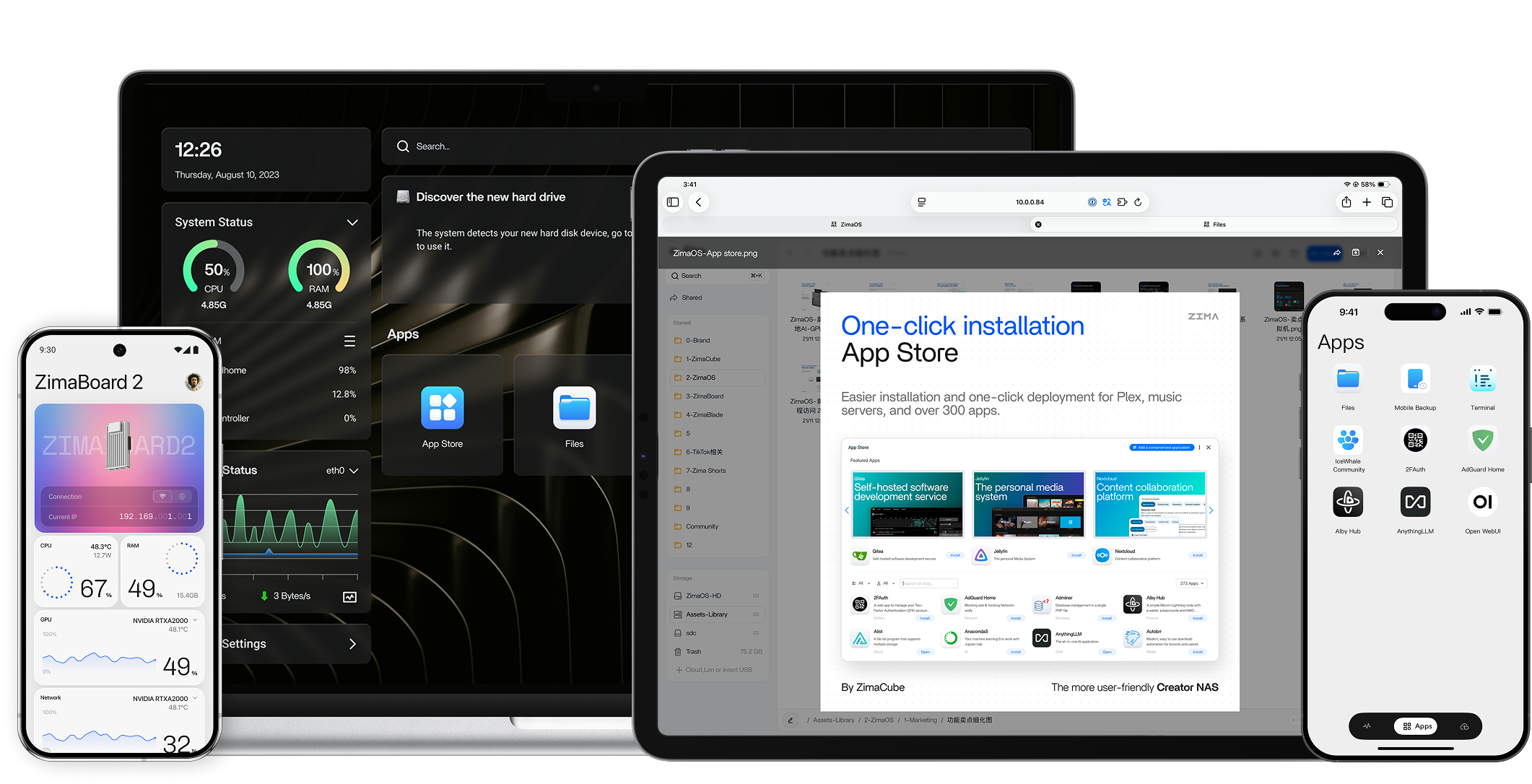
Turn the old PC in your cupboard into a NAS with ZimaOS.

Replace Google Drive, iCloud, Plex Pass, and a paid password manager with one machine you already own. Add a local AI model on the same box for free. The full step by step guide, hardware specs, install, Immich, Jellyfin, Tailscale, Ollama, mobile setup, free vs paid.

Up to
£420
saved / year
From
0
if you have a PC
In about
1hr
to set up
ZimaOS running on a small home NAS
Flagship · open source · MIT

SarmaLink-AI

Multi-provider AI backend with multi-engine failover. OpenAI-compatible proxy, persistent memory, image generation, live web search. Now with cross-repo plugin system and Manus integration.

  • · Sub-50ms handoff when an engine returns 5xx or rate-limits
  • · Powered by DeepSeek V3.2 (685B), Gemini 3, GPT-OSS 120B
  • · Intent-based plugin auto-routing to sibling repos
  • · Manus webhook persistence for long-running agentic tasks
  • · White-label guide with copy-paste v0 prompt
36
engines
7
providers
14
max failover
41ms
fastest token
10
plugins
£0
frontier tier
How I work

One project. One client. At a time.

Most agencies are running ten projects simultaneously. Your work gets squeezed between everyone else's deadlines. I do the opposite: I work with a single client until the job is done, then take on the next.

It means I'm expensive and selective. But it also means the work is consistently excellent, and you always know exactly where things stand.

Your project gets my full attention, not shared with four others

You talk directly to me, not an account manager

I know your codebase, your goals, and your constraints inside out

No briefing a junior developer who has never seen your product

Faster decisions, faster progress, better results

What I build

Six lanes I have shipped repeatedly enough to publish the underlying tools as open source. Each tile links to the matching service page and the open-source repo it draws from.

AI gateways and chat backends

Multi-provider failover, OpenAI-compatible proxies, persistent memory, image generation, live tools. Single-provider risk in production is a pager waiting to happen.

Agent orchestration

Durable multi-agent workflows with deterministic replay, journaled state in Postgres, tool/token/wall-clock budgets, BullMQ queue, Inspector UI. Workflows that survive restarts and pass audit.

Real-time voice and RAG

Sub-second WebRTC voice loops with pluggable STT/LLM/TTS adapters and barge-in. End-to-end RAG starters with cited streaming answers, ten-minute clone-to-ship.

Evals, observability, audit

Datasets as files, scorers as functions, traces in DuckDB, regression mode that fails CI when a release loses ground. OpenTelemetry across every workflow step.

Production infrastructure

Helm charts for Next.js with full observability stack preconfigured. Terraform composing Vercel + Supabase + Cloudflare + DigitalOcean. Eight minutes from empty cluster to fully observable.

Full-stack web applications

Next.js App Router, TypeScript, Supabase Postgres with Row Level Security, Resend, Vercel. Server actions, ISR, OG images, JSON-LD, the boring tests passed.

Why SarmaLinux?

I'm a solo engineer who partners directly with founders, CTOs, and technical leaders.

No account managers. No handoffs. Just focused, high-quality work.

When you work with SarmaLinux, you work with me, and I bring the same care to your project as if it were my own.

Join the SarmaLinux Builder Community

SarmaLinux is not only a technology studio. It is also a growing community of engineers, developers and builders collaborating on meaningful technology projects.

Engineers & Developers

Connect with skilled professionals working on meaningful projects

AI & Automation

Collaborate on AI systems and automation platforms

Experimental Tools

Build and test new software tools together

Knowledge Sharing

Learn from others and share your expertise

Members collaborate on AI systems, automation platforms, cloud architecture and experimental software tools. Anyone interested in building impactful technology is welcome to participate.

Join the Community
Open source help, free

Working on something open source? Apply.

I pick projects I would have loved when I was starting out. Tell me about yours and I will reply within a week. No payment, no contract, just real engineering help in my own time.

Step 1 of 520%

The project

Tell me what it is and where to find it.

Stage

Nineteen open-source repos

Every project I publish solves a problem I hit in real client work and decided to write down properly. All MIT licensed.

AI gateways, agent runners, voice loops, evaluation harnesses, RAG starters, OCR pipelines, MCP servers, a multi-tenant SaaS starter, a WebAssembly sandbox, a Raft KV store, an LSM-tree engine, and the infrastructure glue underneath them.

Playbooks

The way I actually build things

Long form, opinionated walkthroughs of the systems I run for myself and for clients. Real commands, real config, real warnings about what tends to go wrong.

AI engineeringNew
28m

Building a multi-engine LLM gateway with failover

How Sarmalink-AI routes a single OpenAI-shaped request across 14 backends, fails over in under 50ms, and never returns a 500. Health checks, intent routing, cost guards.

Read playbook
AI engineeringNew
25m

Voice agent stack with sub-second round trip

Mediasoup, Whisper, Groq, OpenTTS. The architecture I use for natural voice agents that respond in under a second on a £6 VPS.

Read playbook
AI engineeringNew
24m

Production MCP server, from skeleton to deployed

A real Model Context Protocol server: FastAPI, tools, resources, auth, deployment, observability. Built on the mcp-server-toolkit pattern.

Read playbook
AI engineeringNew
26m

Running Ollama on a Tesla P40, the actual setup

Bringing an old datacentre GPU back to life for local LLM inference. Cooling, driver gotchas, model picks (Gemma 3 12B, Llama 3.3, Qwen 2.5 Coder), real tokens-per-second.

Read playbook
Self-hostingNew
24m

Deploying a Next.js app to a £6 VPS without Vercel

When the Vercel bill starts to bite, here is the exact recipe to move a production Next.js 16 app to a self-hosted VPS without losing any features.

Read playbook
Stack setupNew
20m

Cloudflare R2 as S3-compatible storage for a Next.js app

Replace S3 in your stack with R2: zero egress fees, S3-compatible API, signed uploads from the browser. The pattern I use for invoices, blog images, contracts.

Read playbook
Stack setupNew
22m

Stripe billing in a Next.js app, in 200 lines

Pricing tiers, customer portal, webhooks, recurring usage. The smallest amount of code that gets you a real, live, SCA-compliant billing flow.

Read playbook
Stack setupNew
22m

Magic link auth with Supabase, no foot guns

The exact magic-link flow I use on the admin and client portals: server actions, cookie session, callback handling, RLS hardening. With the four mistakes I made first.

Read playbook
DatabasesNew
20m

Postgres backups that actually restore

Daily pg_dump, point in time recovery, off site to R2, monthly restore drills. Most teams have backups. Far fewer have backups that work.

Read playbook
Stack setupNew
22m

A pragmatic Terraform stack for solo founders

What to put in Terraform, what to leave in the dashboard, and how to keep the diff small. The exact stack I use for Vercel, Supabase, Cloudflare, DigitalOcean.

Read playbook
Self-hosting
35m

Turn an old PC into a NAS with ZimaOS

Replace Google Drive, iCloud, Plex, and a password manager with one box you already own. Hardware, install, Immich, Jellyfin, Tailscale, local Ollama AI, free vs paid.

Read playbook
Self-hosting
20m

Deploying n8n on a VPS

A production-ready n8n install on a £6/mo VPS, Docker, Caddy, Postgres, backups, the lot. The setup I run for myself.

Read playbook
Stack setup
18m

Setting up Supabase with Vercel

Wiring Supabase to a Next.js app on Vercel without the auth foot-guns. RLS, server actions, type-safe queries.

Read playbook
Automation
22m

Migrating from Zapier to n8n

Cutting a £400/mo Zapier bill to £6 without breaking the business. A real migration plan with patterns and pitfalls.

Read playbook
AI engineering
25m

Building a Claude-powered receipt scanner

A working OCR receipt to JSON pipeline using Claude vision, with the prompt and post-processing.

Read playbook
Databases
24m

Zero-downtime database migrations

The pattern I use to ship schema changes in production without a maintenance window. Add, deploy, backfill, switch, drop.

Read playbook
Self-hosting
20m

Replacing SaaS with self-hosted tools

The five SaaS subscriptions I cancelled last year, and what they were replaced with. Real numbers, real trade offs.

Read playbook

Technology for Good

Technology should not only power businesses, it should also help communities.

Charities

Helping charitable organisations operate more effectively with modern tools

Education

Supporting education programmes with digital platforms and automation

Community Organisations

Enabling community groups to focus on their mission, not administration

SarmaLinux supports initiatives where modern technology can help charities, education programmes and community organisations operate more effectively.

Automation systems, AI tools and digital platforms can help organisations focus on their mission instead of administrative work. Organisations working on meaningful causes are welcome to reach out.

charity@sarmalinux.com

Let's build something good.

You've got a problem. I solve problems with software for a living.The fastest way to find out if we can work together is to talk.

Stack I build with

Next.js 16TypeScriptPythonSupabasePostgreSQLVercelCloudflareDigitalOceanResendn8nClaudeOpenAITailwind v4